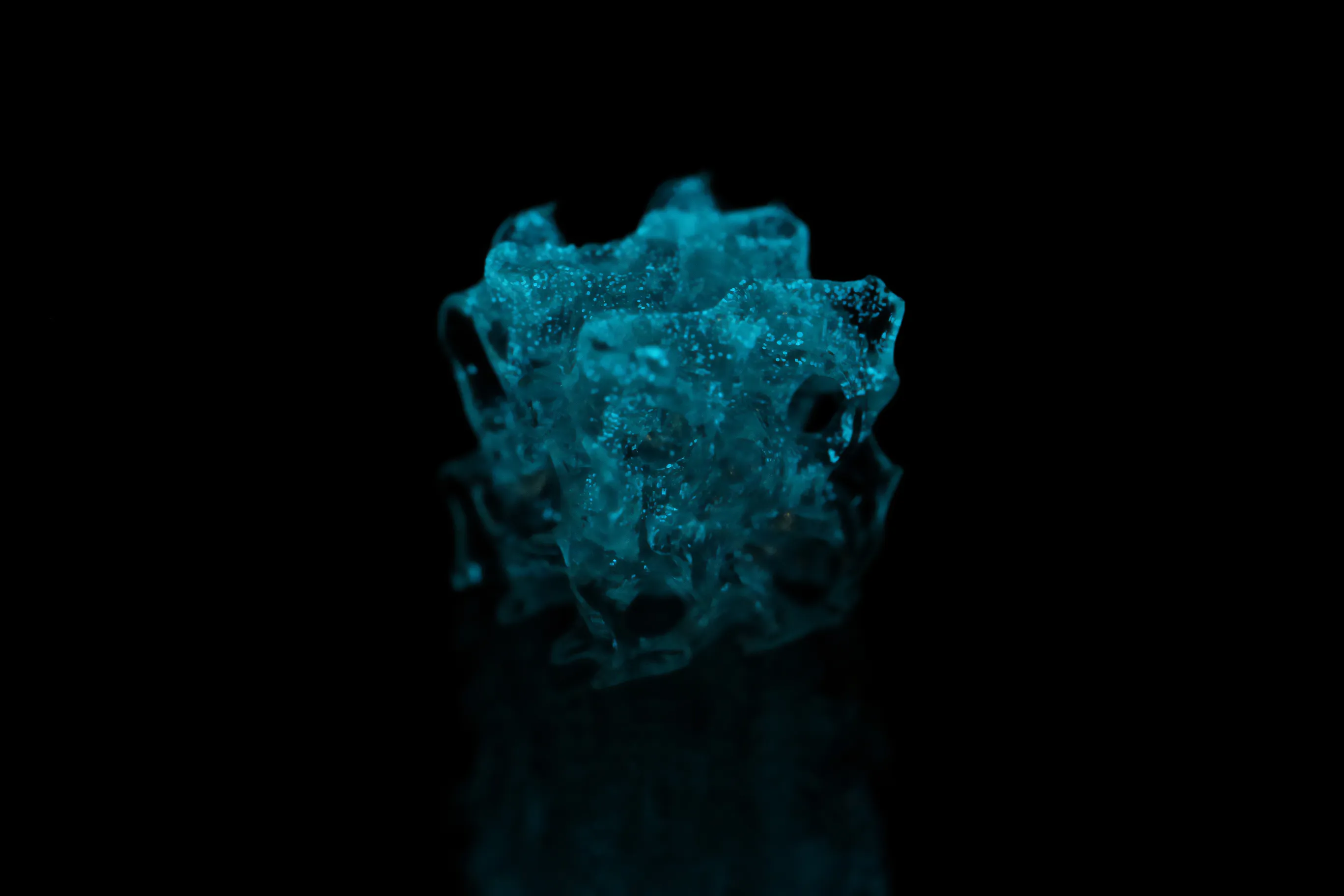
Soft Companions
Textiles that breathe, move, warm and respond to touch.
Textiles are the most intimate material in our lives. One is touching your skin right now, and has been since this morning, and you have not thought about it once. Soft Companions asks what that closeness becomes when the fabric is paying attention, too. Knitted textiles that sense, move and breathe through their own structure. Conductive yarn is twisted into the wool, so stroking replaces pressing. Latex chambers sit under the surface, so the knit swells and collapses like a sleeping animal. Felting and dissolvable yarns leave it hairy and slightly wild, so it tangles and asks to be combed. This fabric gets messy, gets nervous, and gets calmer when you touch it.
Chercheur∙euse
Institution
Tags
Behaviours
Soft Companions consists of five behaviour families, each one with different properties and behaviours.
Morphling
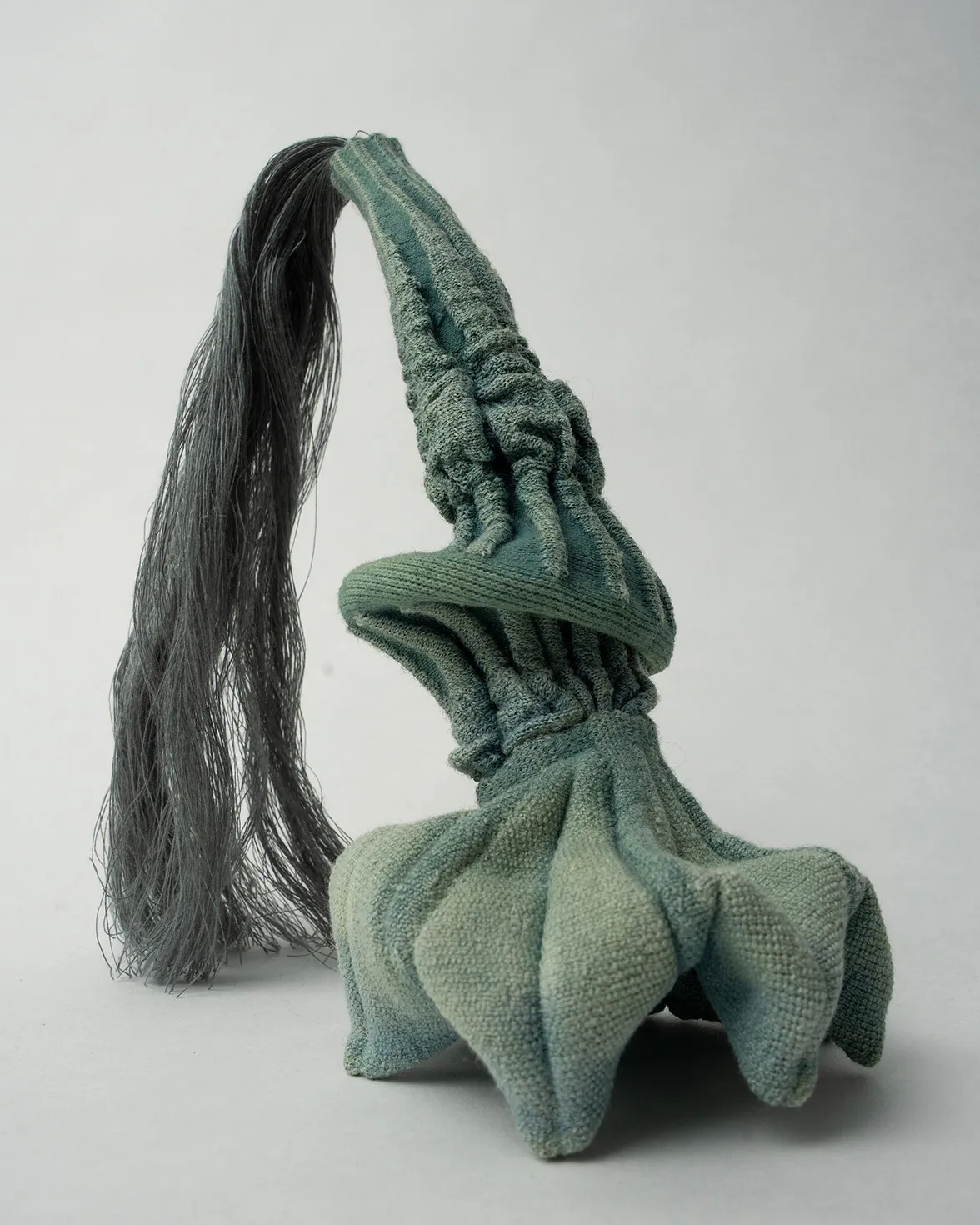
A knitted body with long curly tentacles that hang in the air and slowly open and close. The movement comes from wooden bones pulling on the fabric, so the textile itself is what deforms. The wool surface is brushed and felted until it stops looking machine-made, then dyed with plants. It lives in corridors and doorways, close enough to brush against you as you pass.
Composition:
Wool, viscose, tencel, cotton, wood. Plant based, natural dyes.

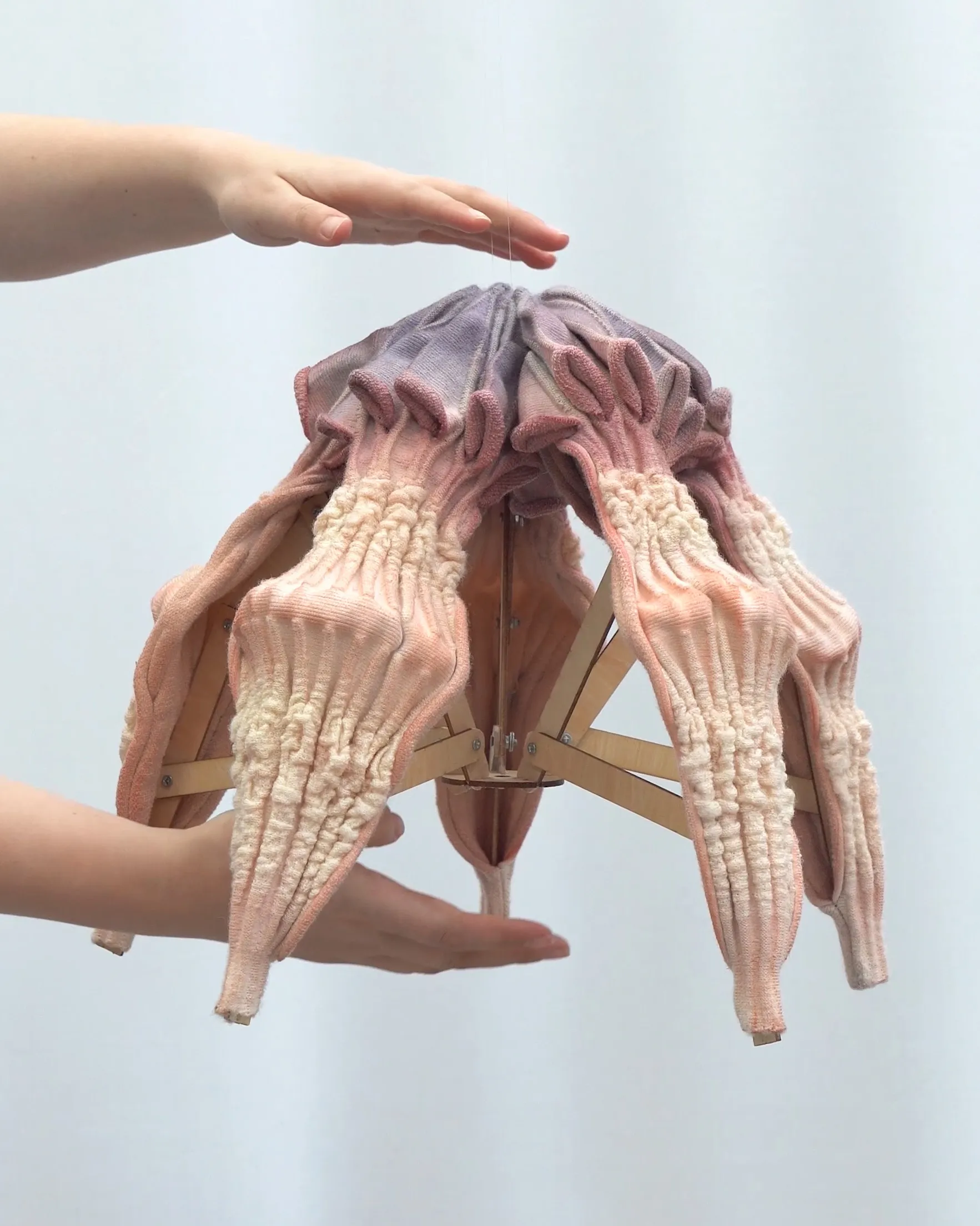

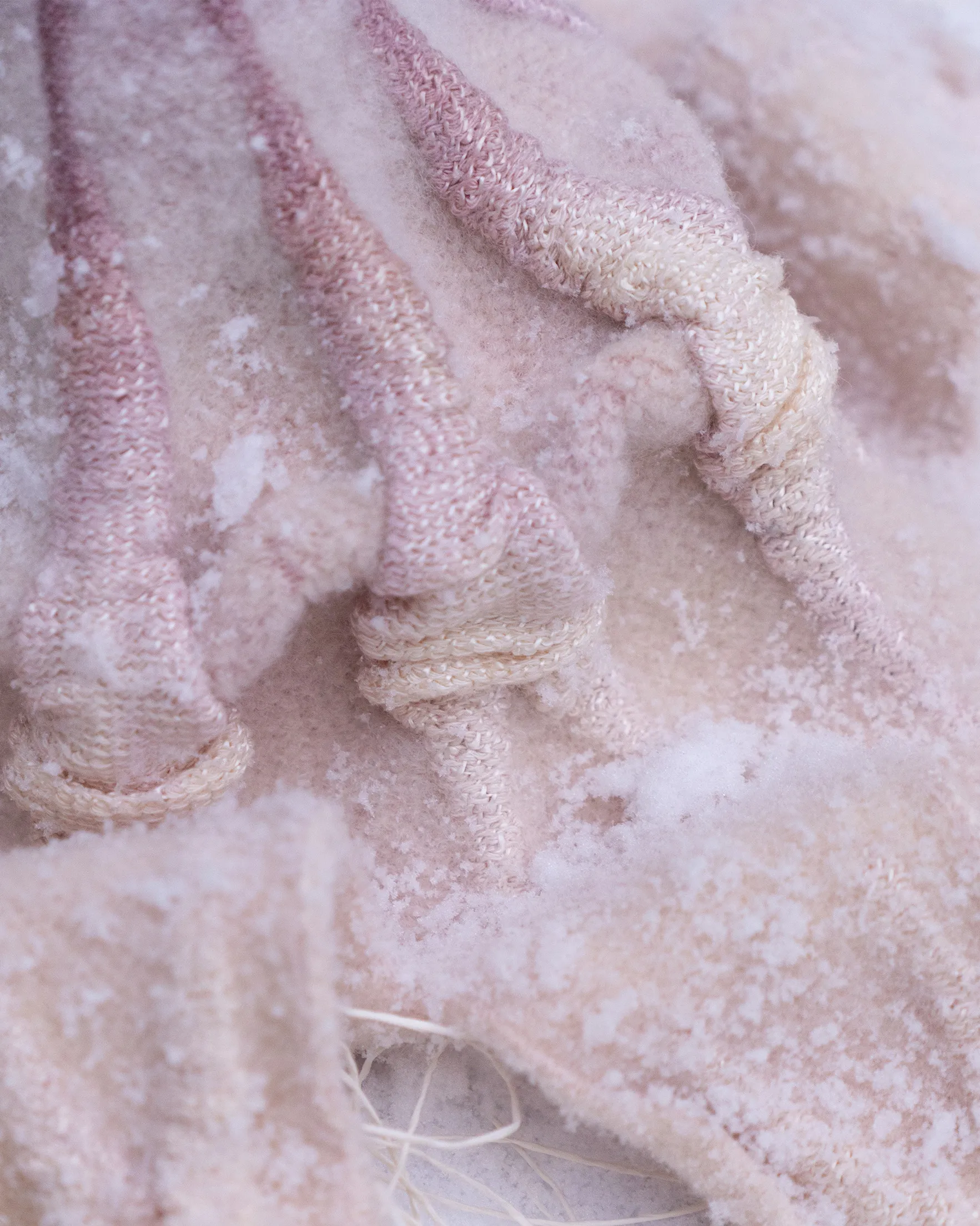

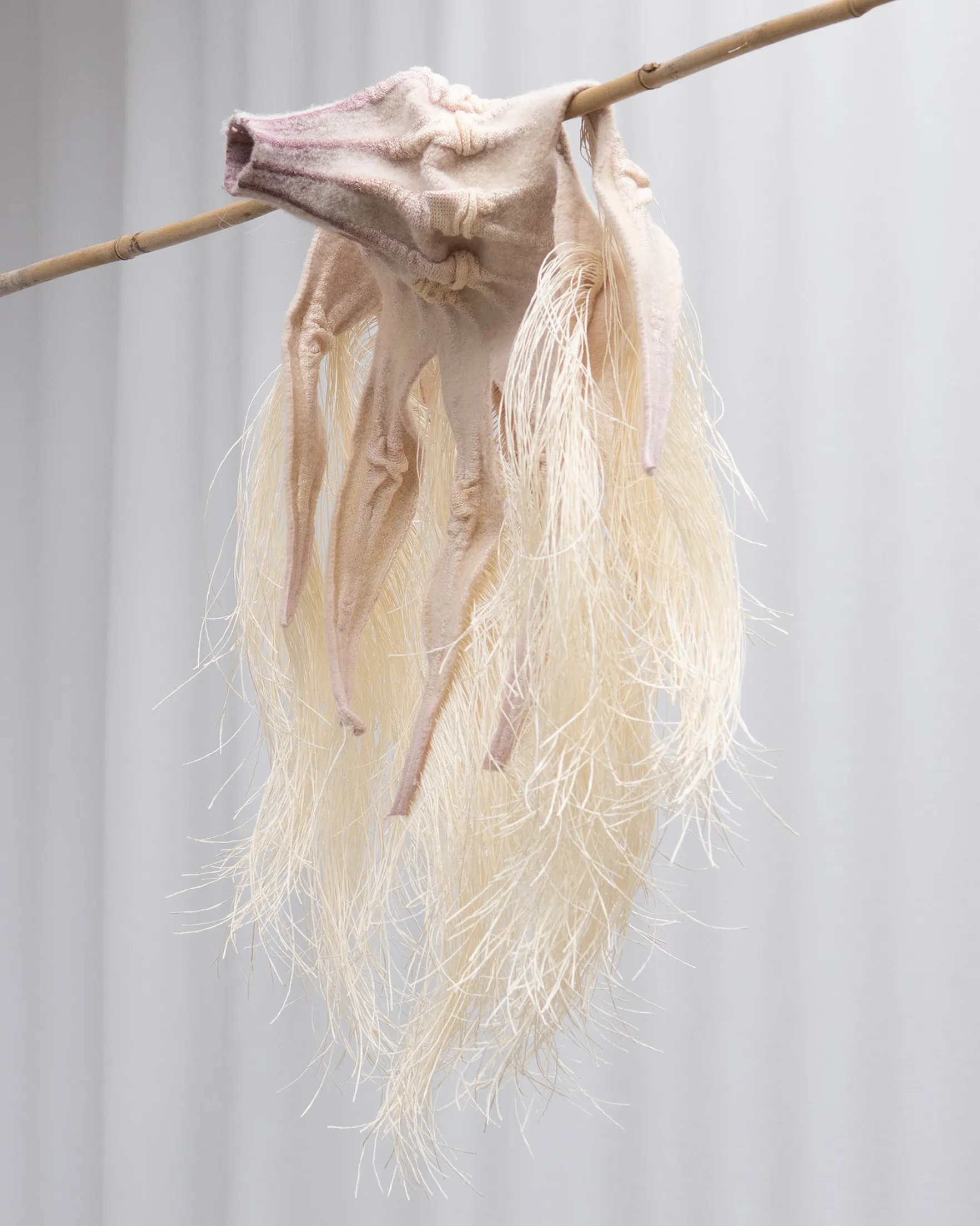

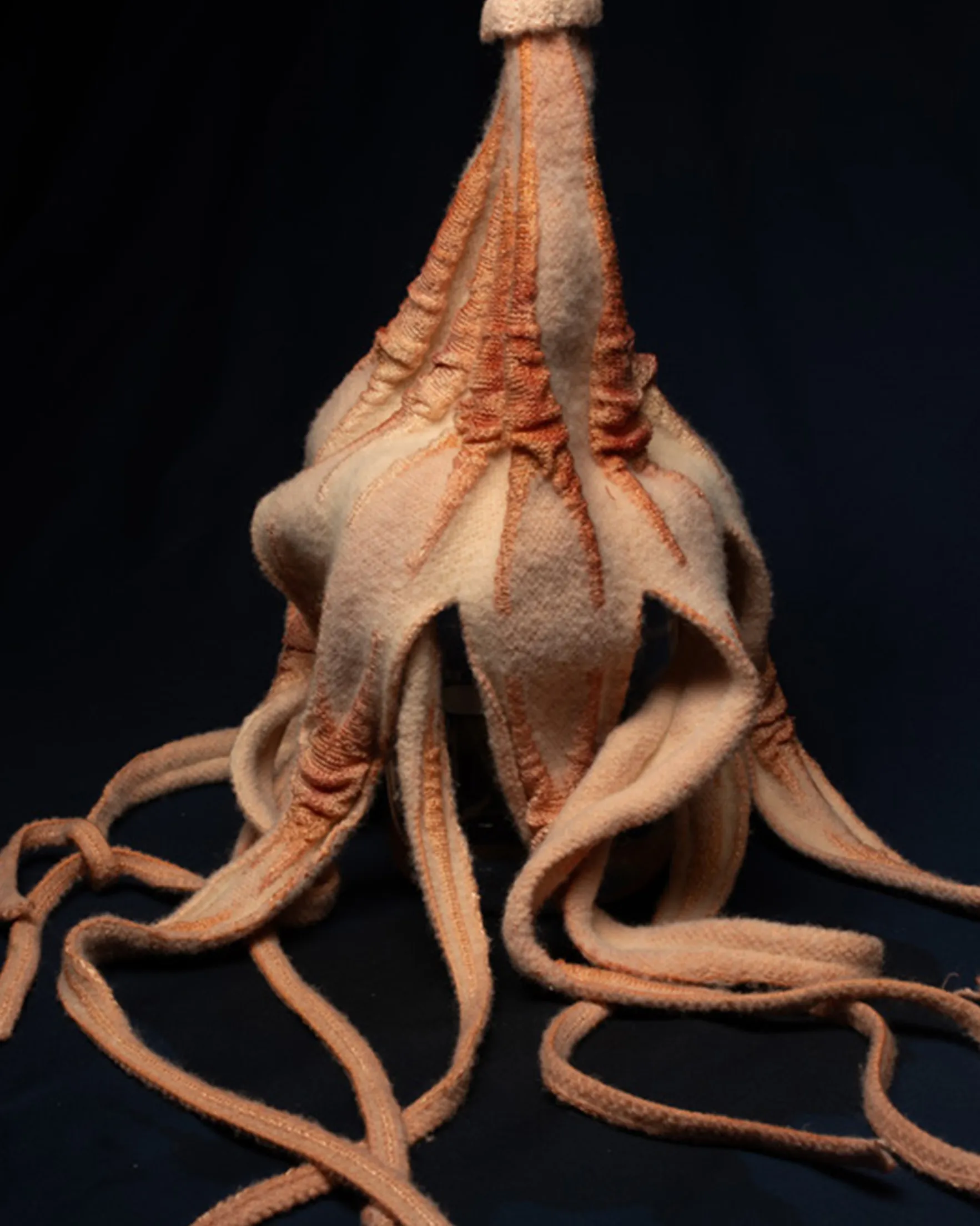

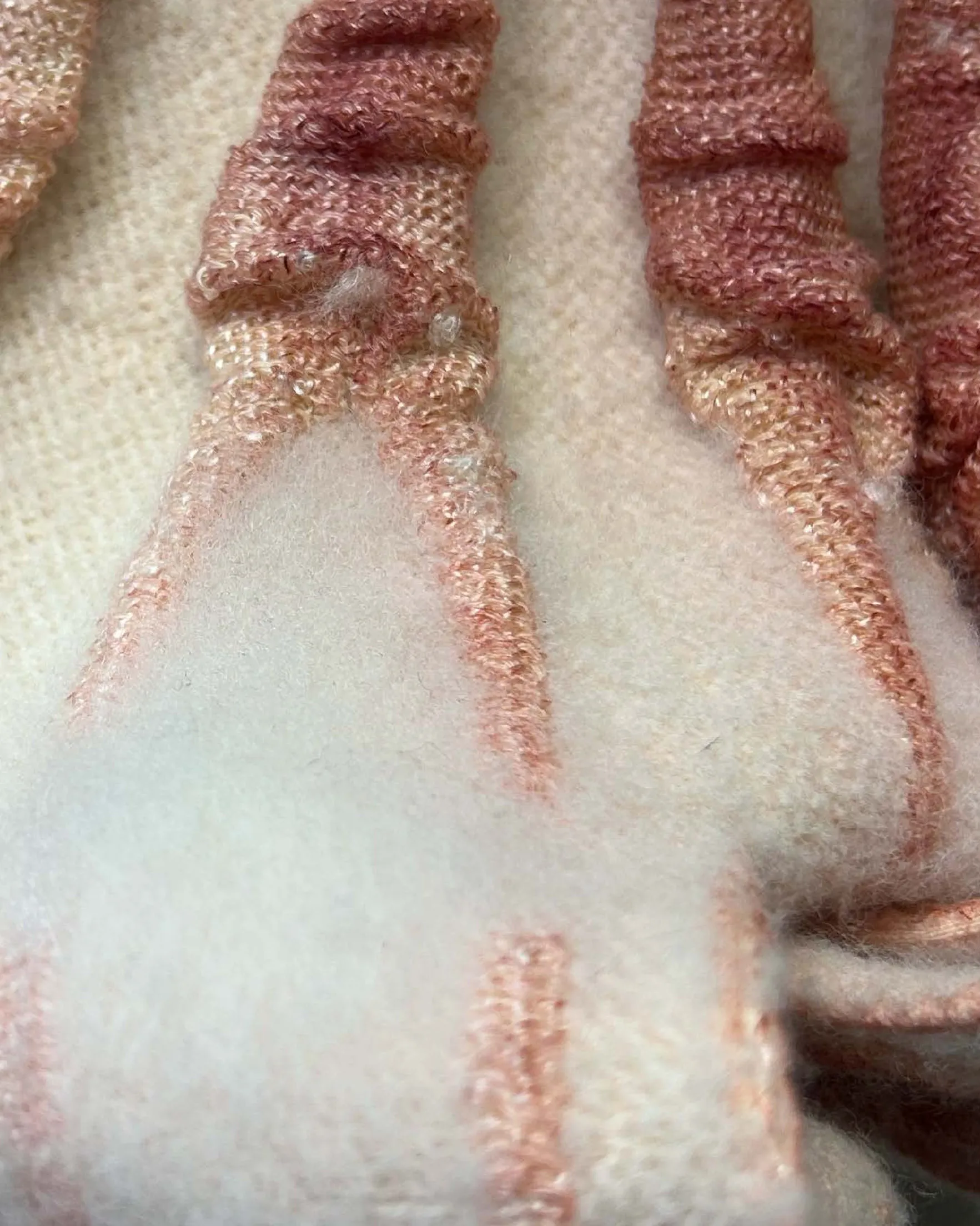
Rather than treating textiles as passive materials or substrates for technology, Soft Companions explores how textiles themselves can become active participants in interaction.
Driftling
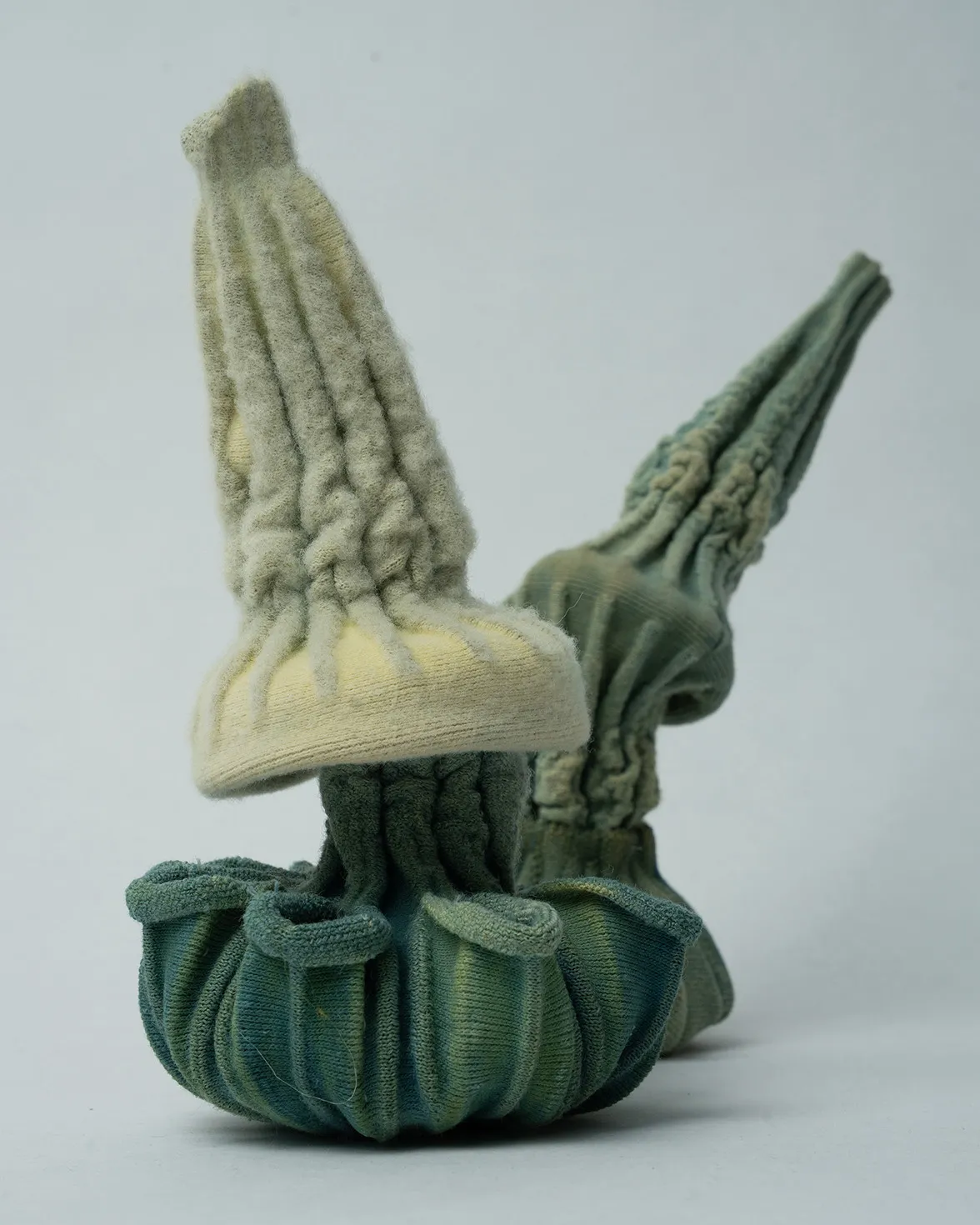
A soft body that breathes. A latex lining inside inflates and deflates, and the knitted wool surface swells with it. Left alone, its breathing is ragged and unsettled, but stroke it for a few minutes, and it slows into a steady rhythm, then starts to purr. Conductive yarn is knitted straight into the fabric, so it feels your hand without any sensor stuck on top.
Video: Celine Caly
Composition:
Wool, cotton, Tencel, conductive yarn, natural latex. Plant based, natural dyes.

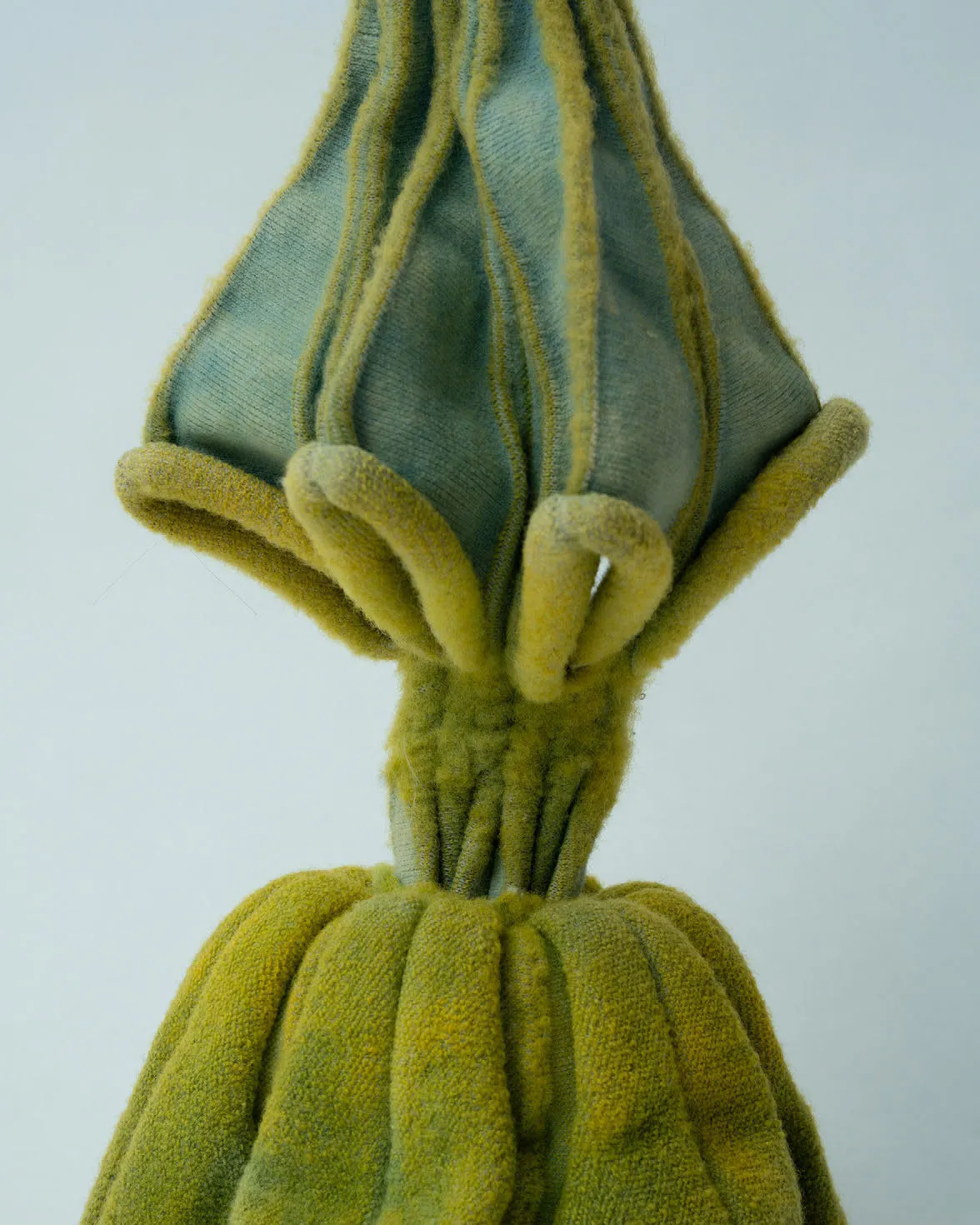

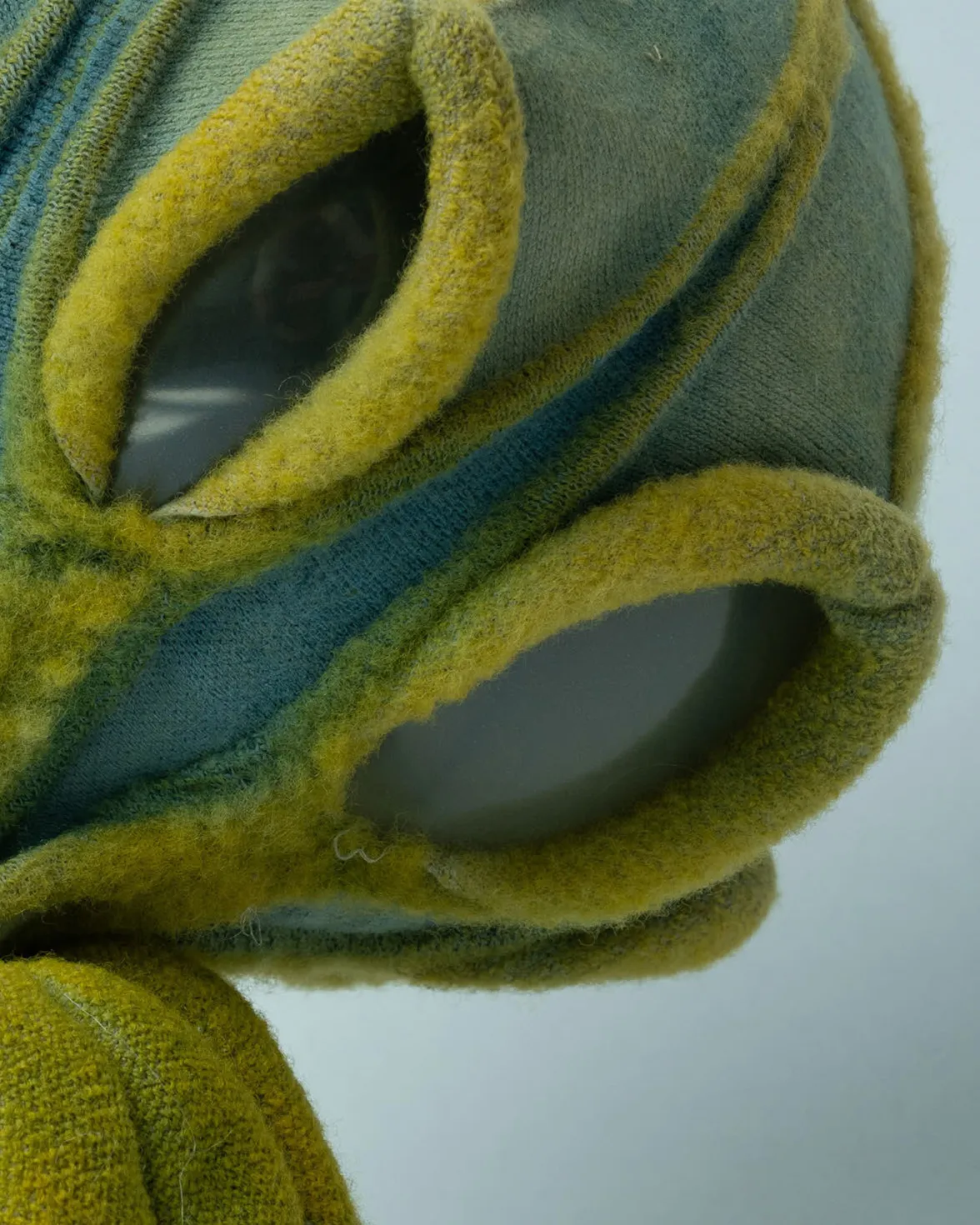


Fondling
A dense knitted tube in cotton and linen, soft and slightly hairy, in muted greys and blues. Inside sits a latex lining folded like a harmonica, so when it inflates, the body sweeps sideways instead of just swelling. It does not wait to be touched. It reaches over and strokes your shoulder.
Video: Celine Caly
Composition:
Cotton, linen, conductive yarn, natural latex.

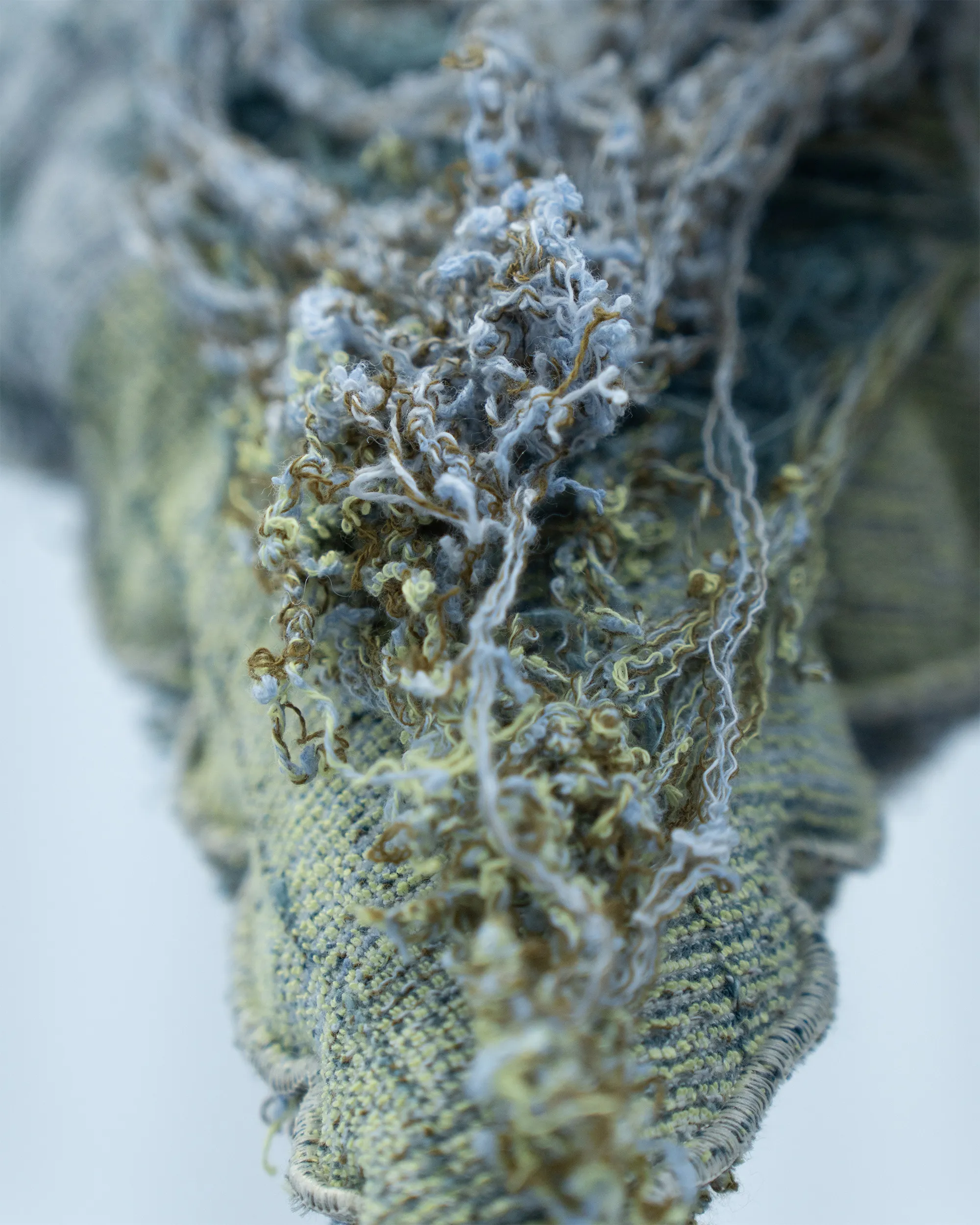
Close-up of the fabric.

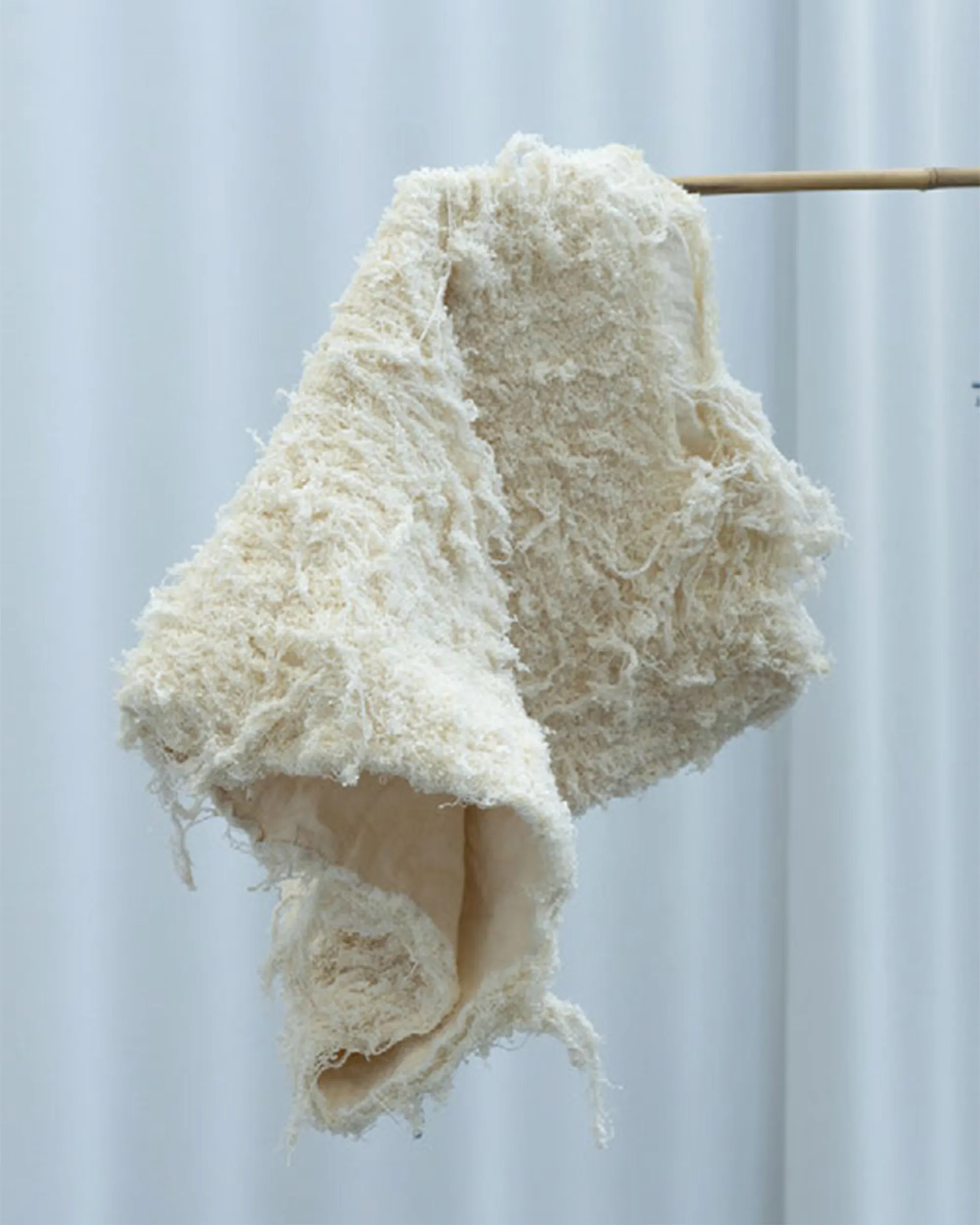
The fabric consists of three layers of strands. All three layers are combined here, but they are very fragile.

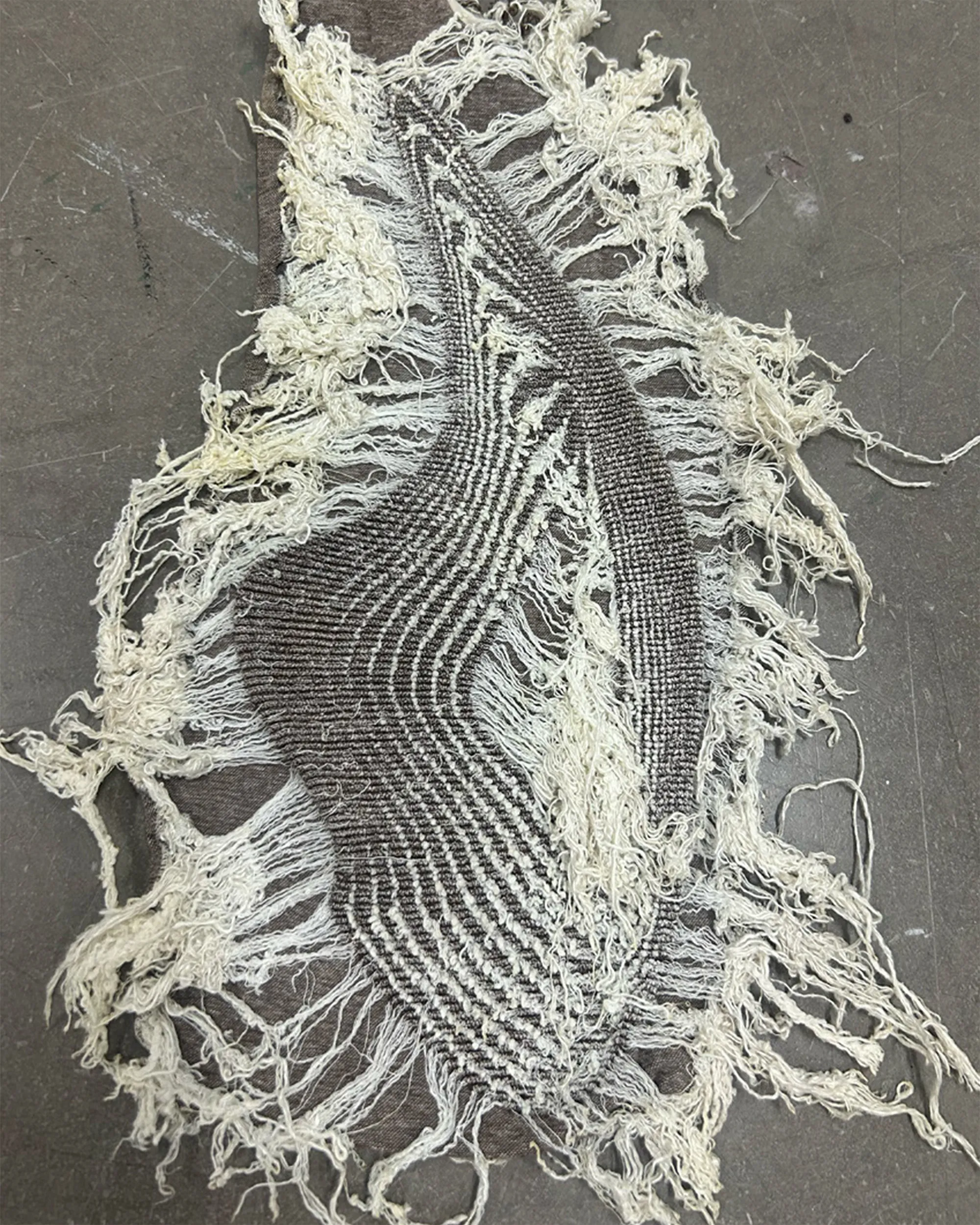
Two layers of strands.

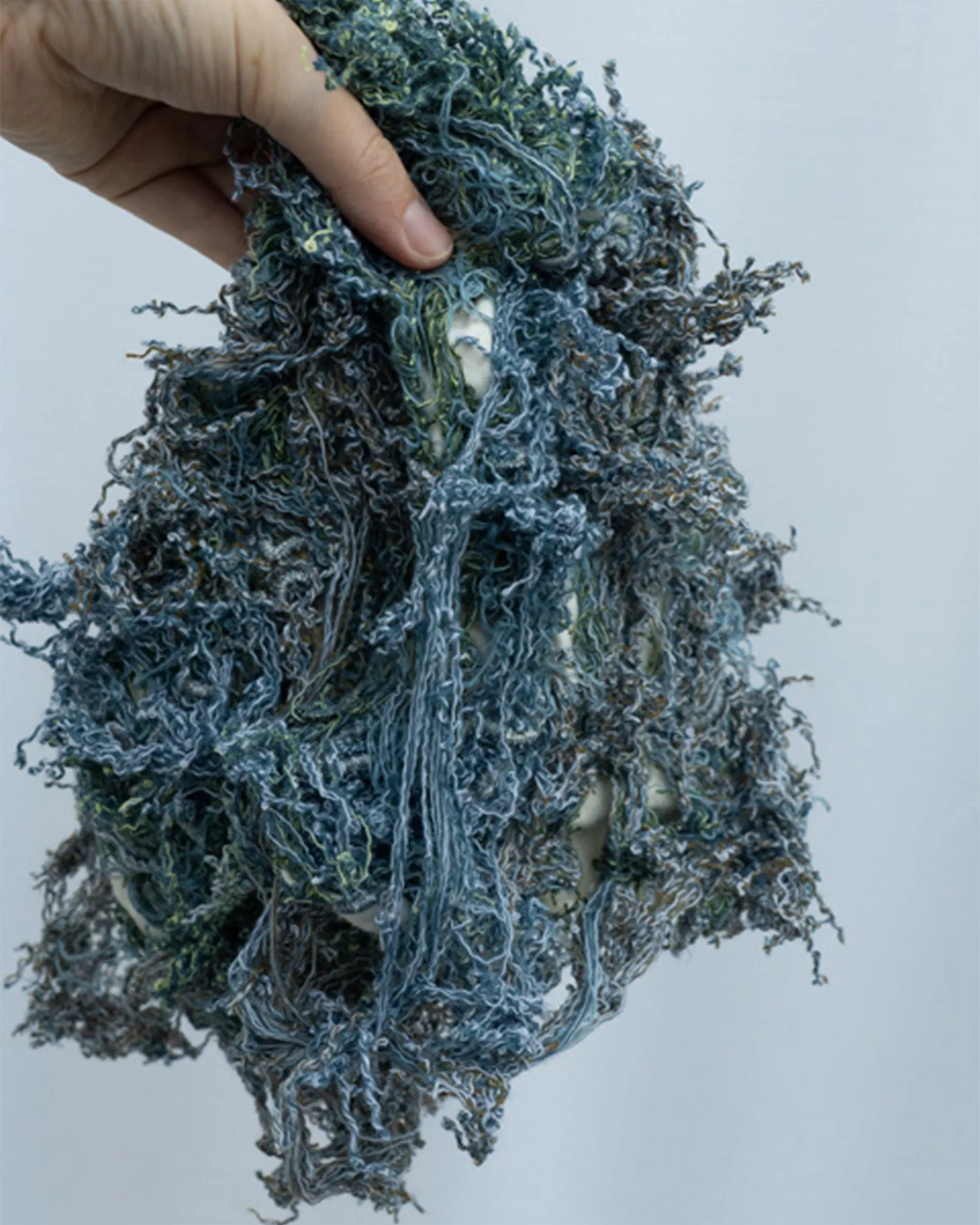
One strand, extremely loosely yarned.
The project investigates how material behaviour can evoke animacy and invite reciprocal care.
Soling
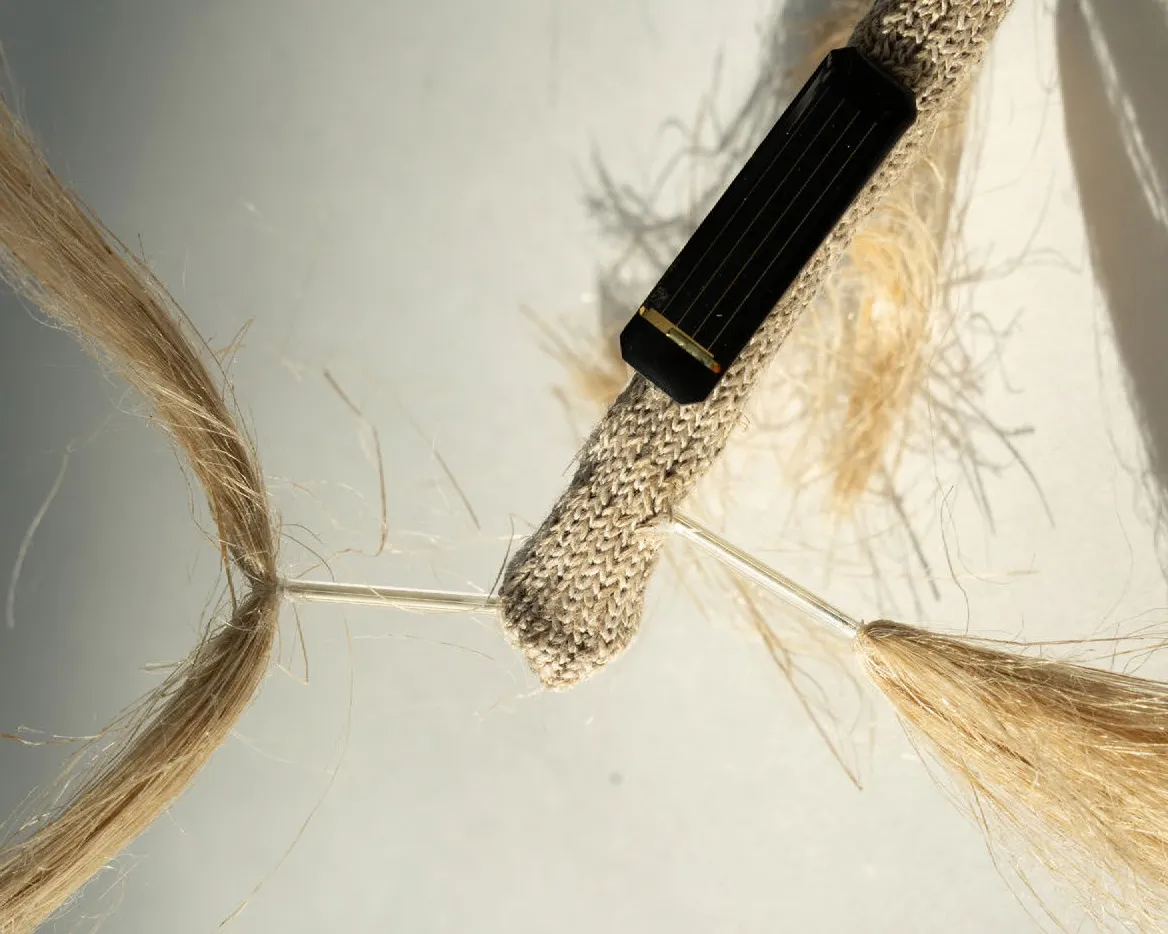
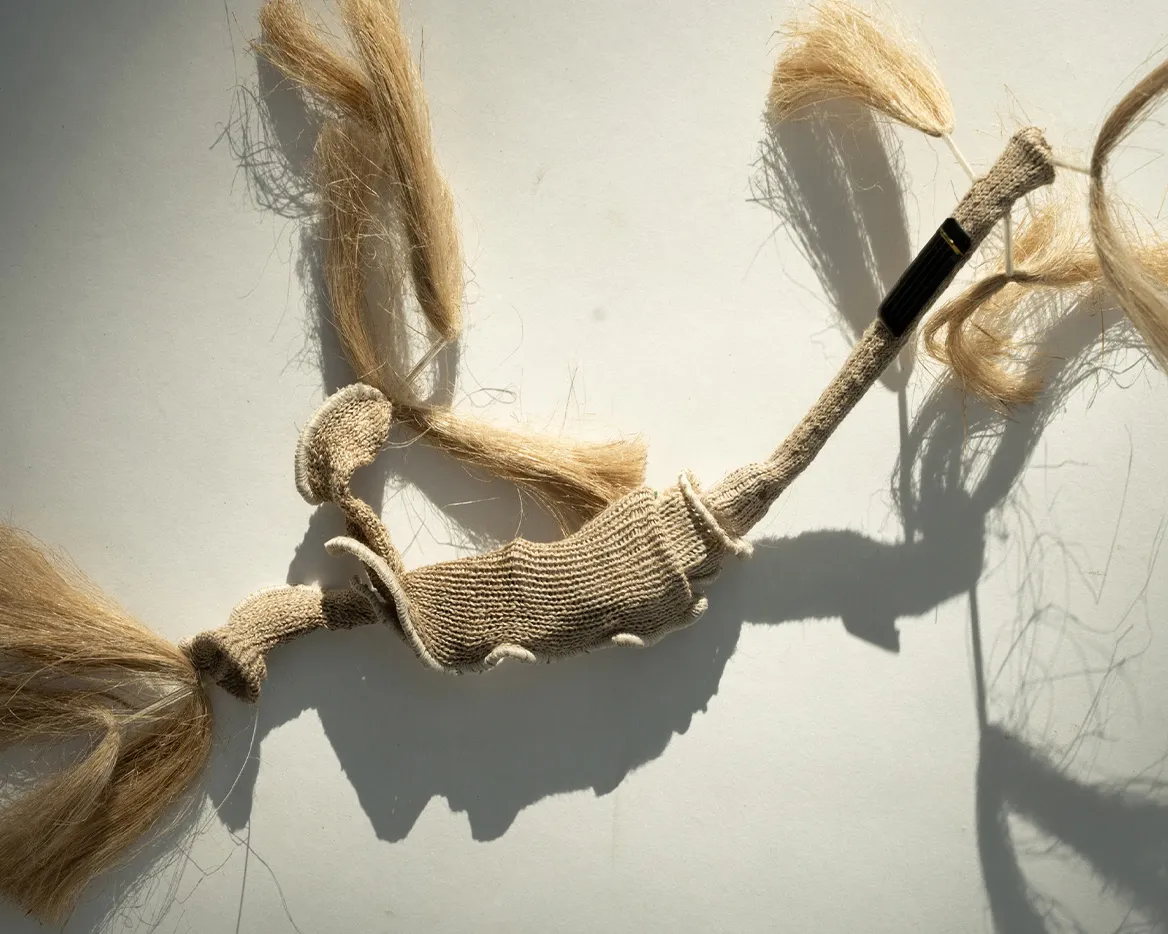
A flock of small creatures in undyed linen, light enough to skitter across a smooth surface. A tiny motor makes them shiver, and a solar panel in their skin is their only power source. They drift towards the light through the day and go still when it leaves. Too much sun and they shiver off into a corner, which they seem to think is a game.

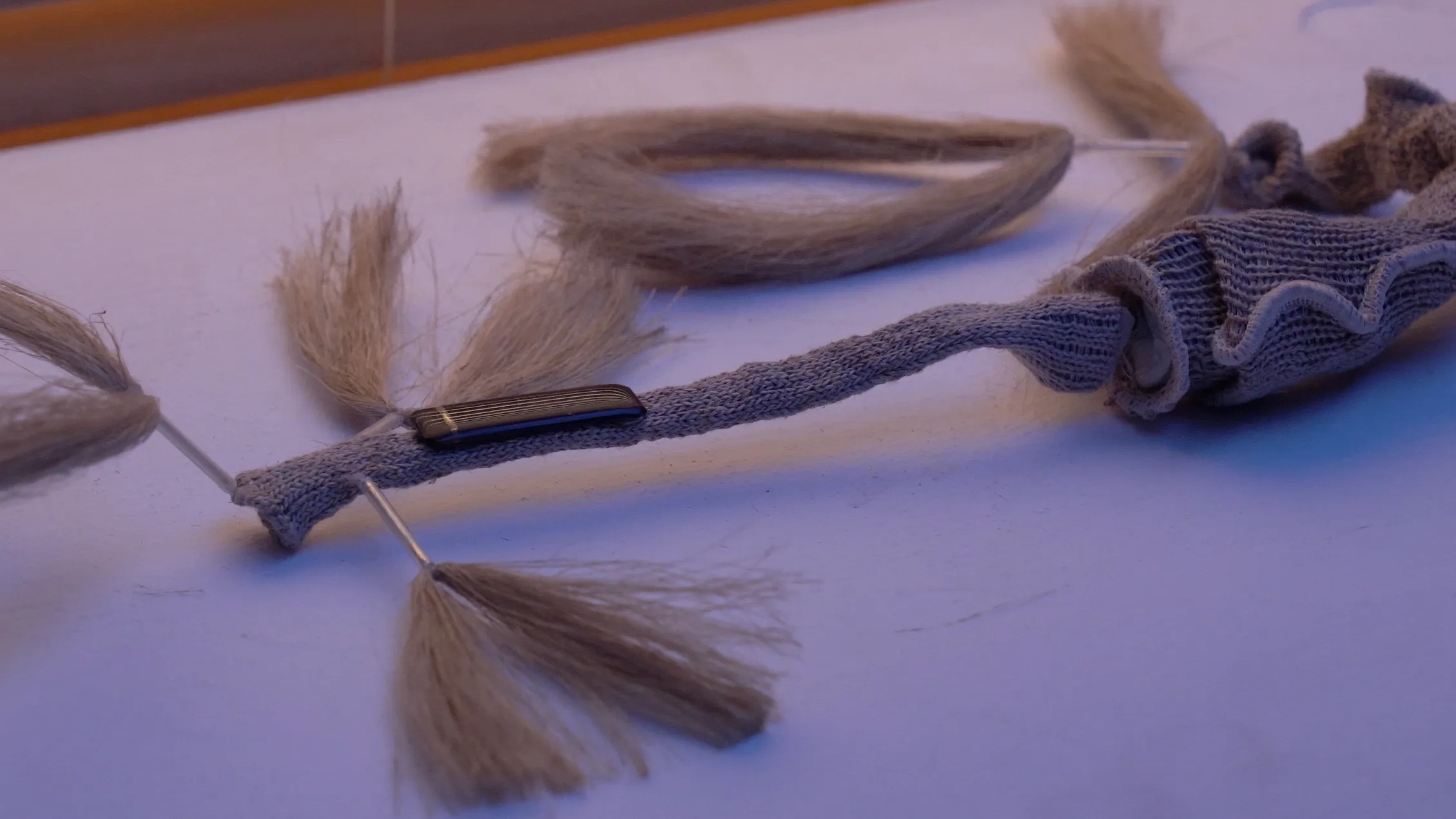
Composition:
Raw linen, flax, glass, metal and 3D-printed parts, solar panel, vibration motor.


Groomling
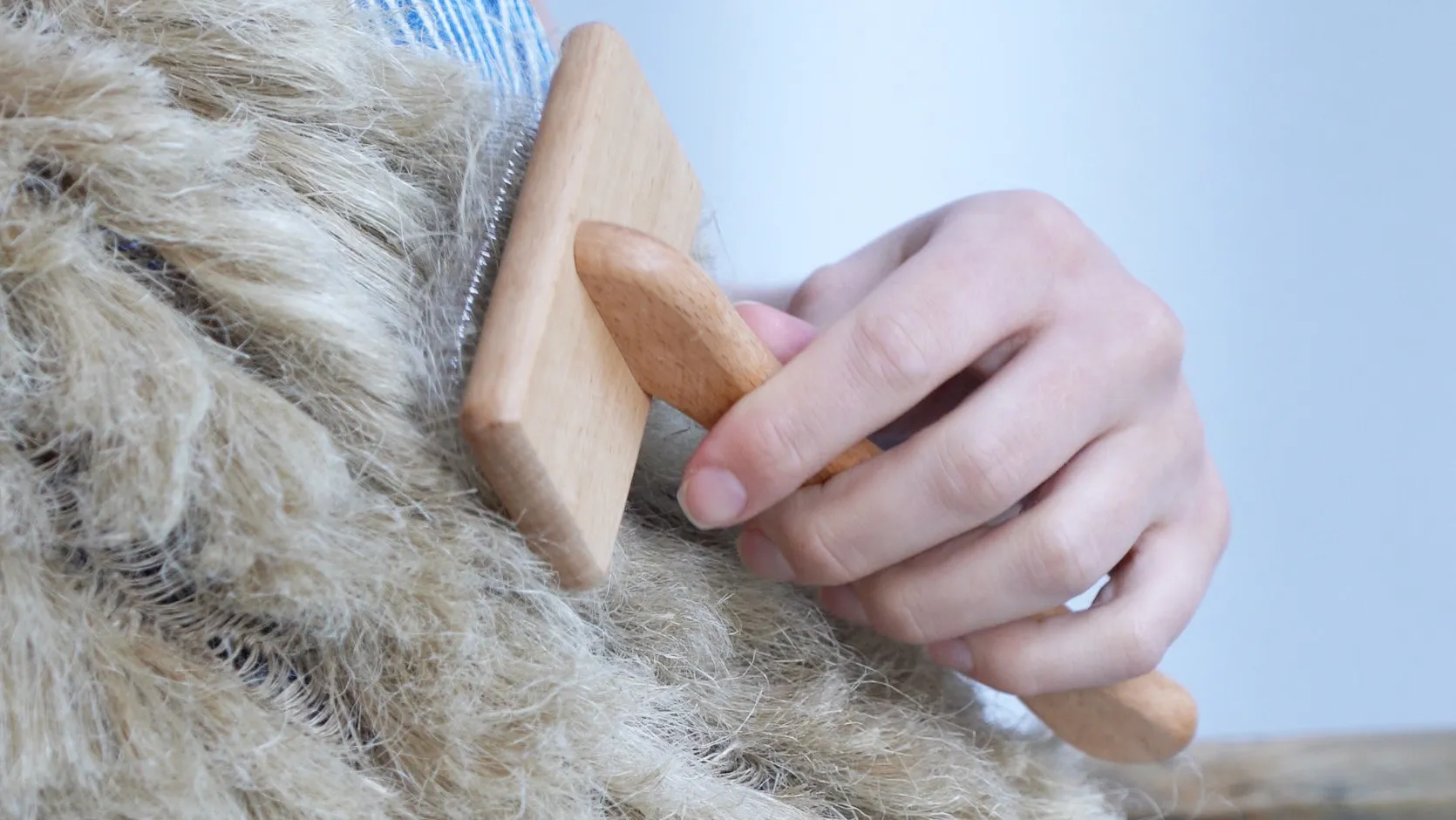
The furriest of the five. Knitted in raw linen, then brushed until the fibres stand loose and start tangling on their own. Underneath the fur is a soft jelly body that gives it a slack, animal-like weight. Leave it alone, and it mats. Comb it, and it purrs back.

Composition:
Raw linen, flax, conductive yarn, jelly, vibration motor.

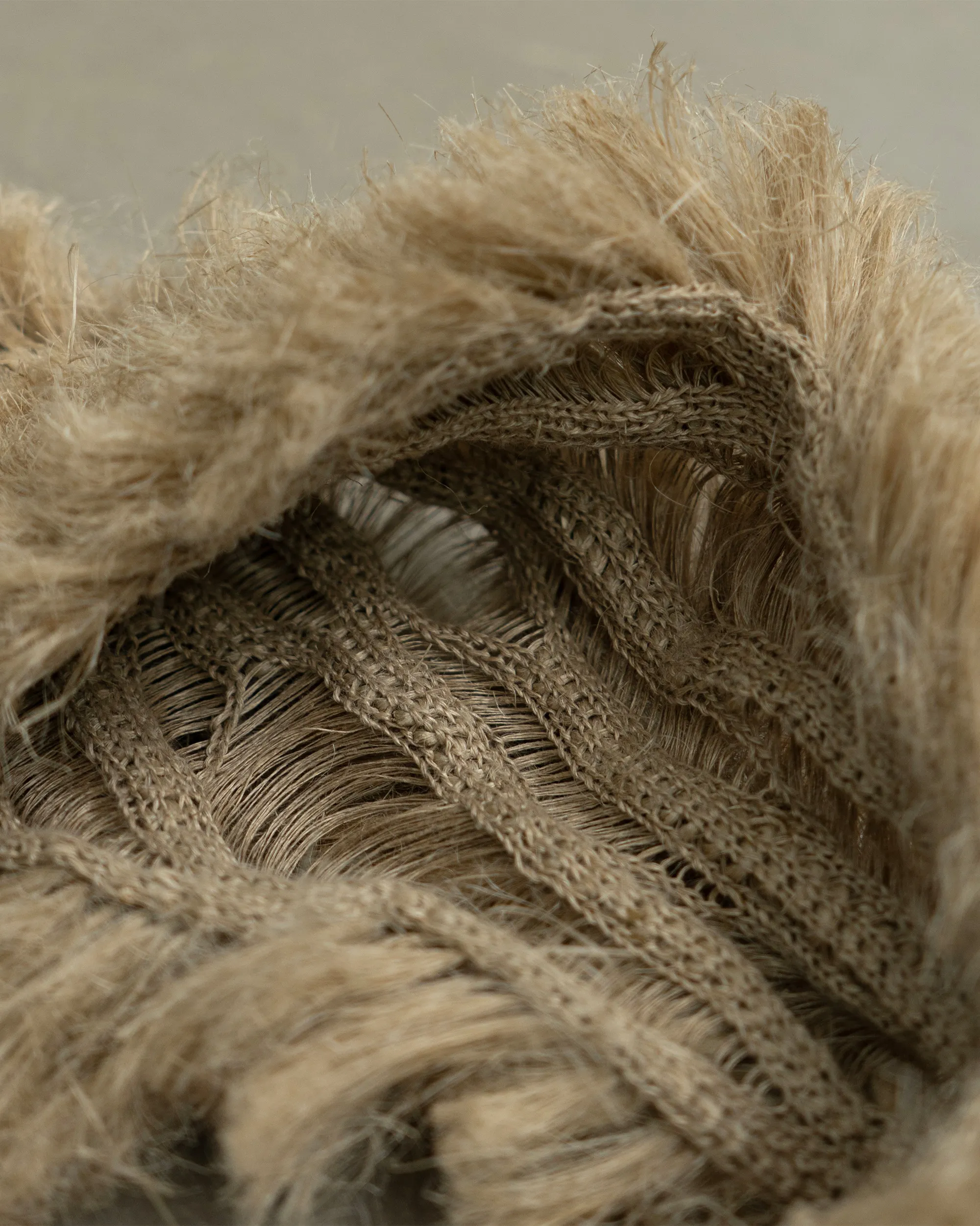
Close-up of the fabric.
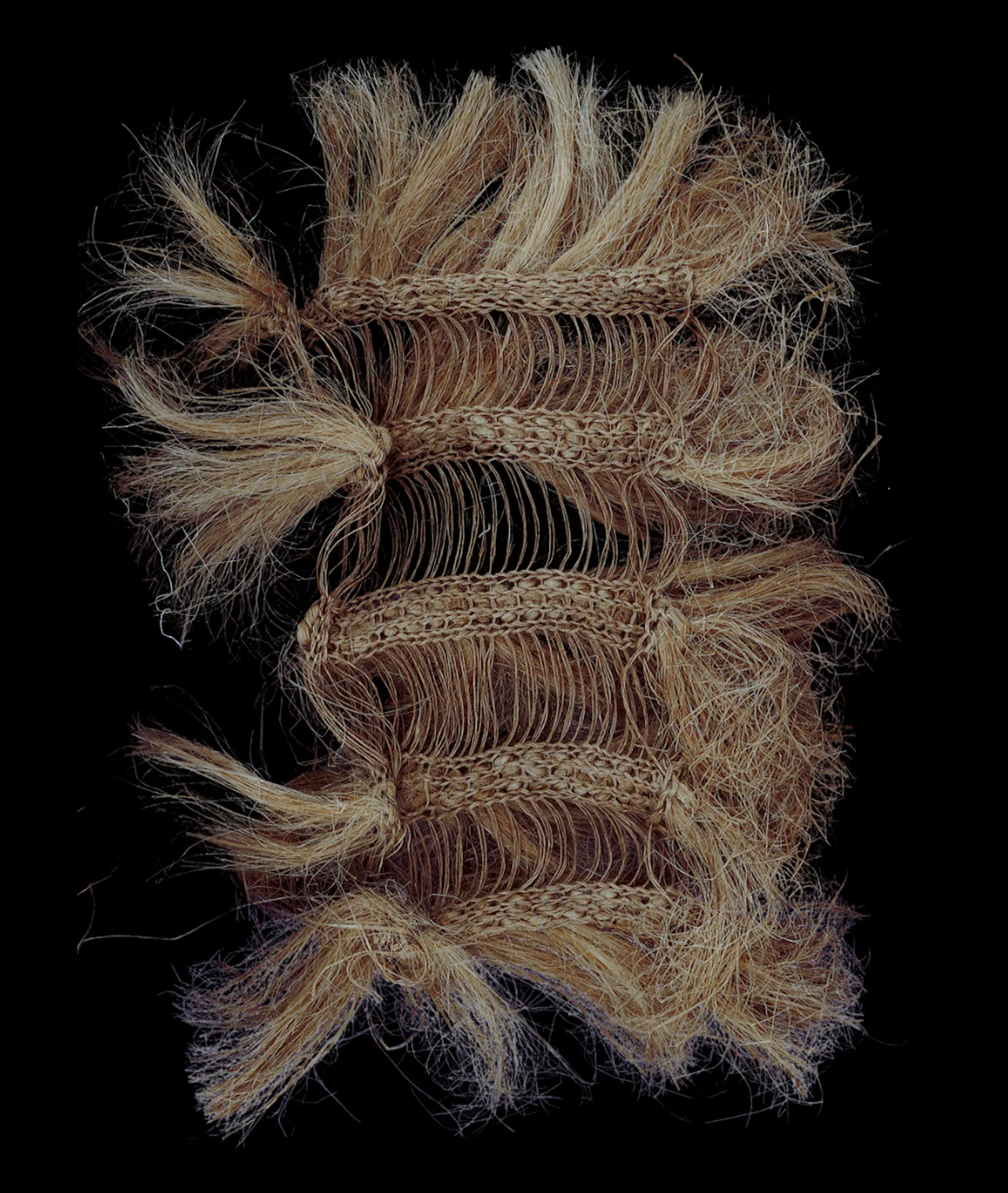
Scan of the material sample
Applications
What can we do with it?
Soft Companions was developed as a design research project exploring alternative ways of relating to materials. While not designed for one specific application, the approach could contribute to future textile products, wearables, therapeutic environments or interactive interior spaces where wellbeing, attentiveness and sensory engagement play a role.
Fabrication
How is it done?
The project combines knitted textiles with e-textile principles, pneumatic systems, embedded electronics and capacitive sensing. Different yarns and knit structures were used for their tactile, structural and/or sensory qualities and were further developed through techniques such as brushing, felting, dissolvable yarns and natural dyeing.
The fabrication varies across the different creature families, with each one requiring its own combination of textile techniques and interactive technologies.
Knitted flat, the surface is then felted, brushed and dyed with plants. A wooden frame goes in afterwards, and pulling on it opens and closes the whole knit.
The skin is knitted with conductive yarn running through it, then felted, brushed and dyed. The lining is made separately from sheets of latex, welded together into air chambers. It slips inside the knit and connects to a small compressor and valve.
Knitted as a tube on a circular machine, with an extra yarn laid in between the layers. Inside sits a latex chamber folded like a harmonica, so air makes it sweep sideways instead of just swelling.
Small bodies knitted in plain linen, with embroidery worked into the surface. Metal and 3D-printed parts go inside as a light skeleton. The only electronics are a solar panel and a tiny vibration motor.
Knitted in linen, then brushed hard so the fibres lift and stand away from the surface. Conductive yarn runs through the knit, so the surface itself registers the comb. A soft jelly body goes inside to give it weight.
Feedback
Katrijn wonders what you think about this research. Let her know!


Researcher of Soft Companions
Links
Want more details about the Soft Companions?
Read the Research paper: Soft Companions: A Breathing Textile Creature for Sensory Rituals of Care
Technical support – Fondling: Bram de Groot
Technical support – Driftling: Berend te Linde
Supervisor: Dr. Erin Lewis
Brainstorming and knowledge exchange: Melissa van Schaik
Have questions? Get in touch